Serving Apple Valley, CA and surrounding areas. (442) 221-3755
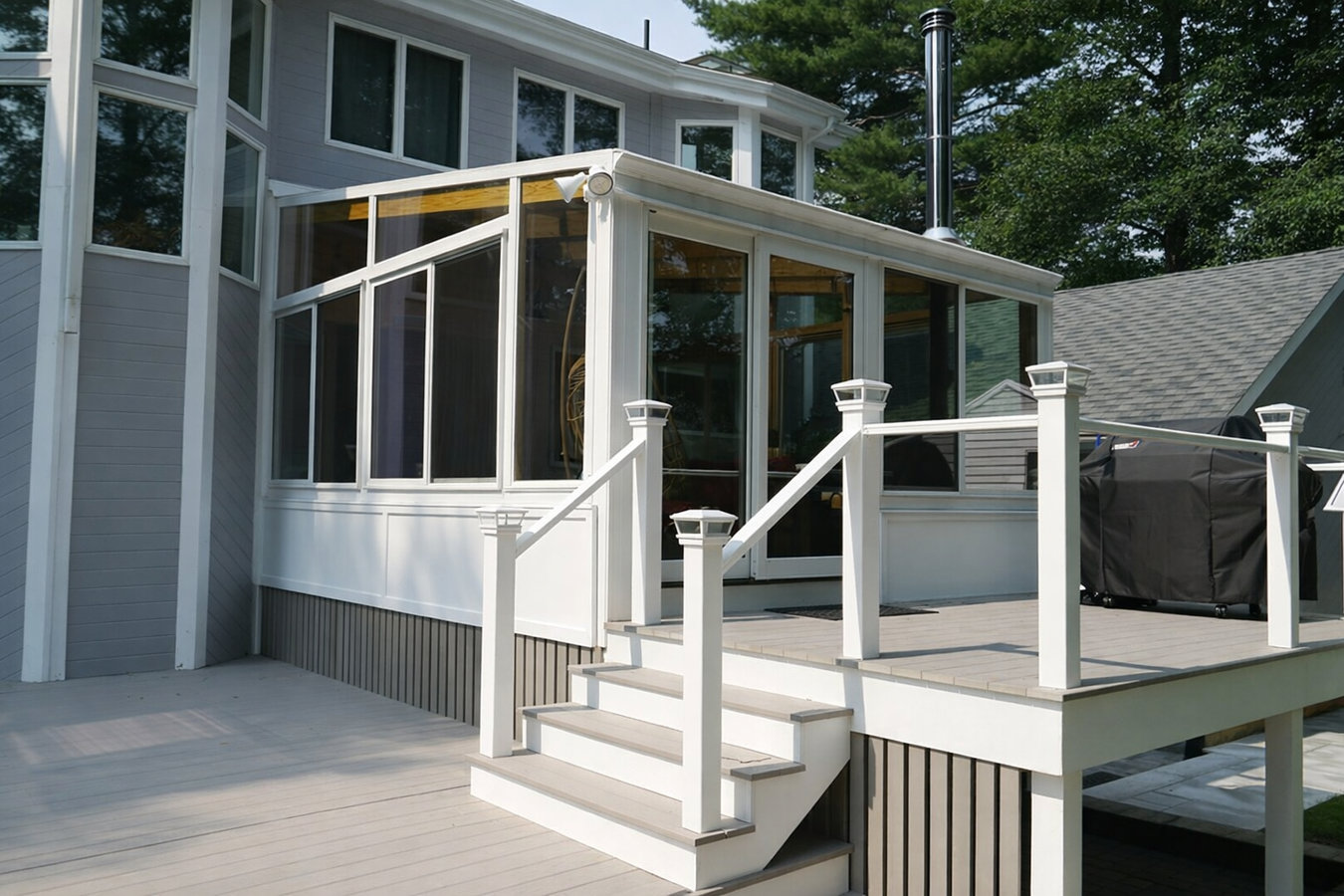
Your deck is already elevated and framed - we enclose it with glass walls, a proper roof, and climate control so you gain a real room instead of a platform you avoid most of the year.
Deck-to-sunroom conversion in Apple Valley, CA takes an existing outdoor deck and transforms it into a fully enclosed, climate-controlled room - most conversions involve three to eight weeks of construction once San Bernardino County permits are approved.
Because a deck is already elevated and framed, it gives contractors a structural head start over building from the ground up. The critical step before any framing begins is inspecting the existing footings - the buried posts that hold the deck up. In Apple Valley's sandy, sometimes shifting desert soil, footings can settle unevenly over time, and a sunroom built on a compromised deck will develop gaps, cracks, and door alignment problems within a few years. We check footings at the estimate visit, not after we have started. For homeowners with a concrete slab instead of a raised deck, the process is similar - see our patio-to-sunroom conversion page for details specific to that scenario.
The finished room functions like any other room in your home - it is not a screened porch or a patio cover. It is heated and cooled, fully enclosed, and usable on the hottest afternoon in August and the coldest night in January.
If you walk past your deck from June through September without stepping on it because it is simply too hot, the space is not working for you. A properly designed sunroom with heat-blocking glass and a mini-split cooling unit turns that platform into a room you can use on a 105-degree Apple Valley afternoon. If your outdoor space is comfortable for only a few months a year, enclosing it is worth serious consideration.
If your family has outgrown the home's interior but a full room addition feels like too much money and disruption, your existing deck is a platform you have already paid for. Converting it is almost always faster and less expensive than starting new square footage from the ground up. Many Apple Valley homeowners discover this option after getting a quote for a traditional addition and experiencing sticker shock.
If your deck has boards that flex underfoot, railings that wobble, or posts showing signs of wear, you are already facing a repair bill. At that point, it is worth asking whether a full conversion makes more sense than patching it again. A contractor can assess whether the structure is a good candidate for conversion or whether the deck needs to be rebuilt first.
Apple Valley and the broader Victor Valley area experience frequent high-wind events, and blowing desert dust is a real quality-of-life issue for open outdoor spaces. If you find yourself bringing furniture inside on windy days or simply avoiding the deck, an enclosed sunroom eliminates that problem. The space becomes weather-proof, not just weather-dependent.
Every deck conversion starts with a footing and framing inspection - we check whether the existing structure can handle the added weight of walls, glass, and a roof before a single design decision is made. If reinforcement is needed, we price it into your estimate upfront, not as a change order after work has begun. From there, the design conversation covers glass selection, roofing material, how the room will be heated and cooled, and how to tie the new structure into your home's roofline so it looks intentional rather than tacked on.
For homeowners who want a room with the feel of a traditional living space rather than a sunroom, we also discuss all season rooms as an option - these are fully insulated, drywalled interiors that look and feel like any other room in the house. The right choice depends on how you plan to use the space and what level of interior finish makes sense for your home and budget.
Best for homeowners with a structurally sound deck who want a protected, climate-controlled room at a straightforward price - walls, glass, roof, and basic HVAC.
Best for homeowners whose existing deck footings need reinforcement before enclosure - we address the structural work first so the finished room is stable for the long term.
Best for homeowners in Apple Valley who want a room that is genuinely comfortable in the summer - low-E double-pane glass cuts solar heat gain significantly compared to standard glazing.
Best for homeowners who want a completely self-sufficient room - a dedicated mini-split unit heats and cools the space independently from the rest of the home year-round.
Apple Valley's High Desert climate is one of the most demanding environments for outdoor living structures in Southern California. Summers regularly hit 100 degrees or higher, winters drop below freezing overnight, and the desert winds that sweep through the Victor Valley carry fine grit that gets into every open surface. A deck that sits unused from June through September is not giving you a return on the investment you already made - and a conversion turns it into a year-round room that works in every season. The U.S. Department of Energy notes that ductless mini-split systems are an efficient choice for additions and conversions, particularly when conditioning a single room separately from the main house.
The permitting process here is also specific to Apple Valley's status as an unincorporated community governed by San Bernardino County - permits go through the county's Land Use Services office rather than a town or city department, and review timelines can stretch four to eight weeks. Homeowners in nearby communities like Victorville and Adelanto face similar county permit timelines, and the soil conditions across the region reward a careful footing inspection before any conversion begins. Starting the process early is the single most reliable way to get your room finished by the date you have in mind.
We ask about your deck's size, age, and what you are hoping to use the new room for. We reply within one business day. It is not a sales pitch - it is how we figure out whether your project is a good fit and what to look at during the site visit. Share a rough measurement and whether you have an HOA.
We visit your home to look at the deck in person - checking the framing, footings, and how the deck connects to the house. This visit takes 30 to 60 minutes. A written estimate follows within a few days, breaking down labor, materials, and permit fees separately so you know exactly what you are comparing.
Once you sign the contract, we submit permit applications to San Bernardino County Land Use Services on your behalf. County review typically takes four to eight weeks. While you wait, you and your contractor finalize glass type, roofing material, and climate control options - so construction can start without delays once permits arrive.
The crew starts with any reinforcement the deck needs, then frames walls, installs the roof, and fits windows and doors. County inspectors visit at key stages - that is required and expected, not a sign anything is wrong. When work is complete, we walk through every window and door with you and hand over all permit and warranty documentation.
Free written estimate. No obligation. We handle San Bernardino County permits from start to finish.
(442) 221-3755Apple Valley's sandy desert soil causes footings to settle in ways contractors from coastal California rarely encounter. We check every deck's footings and framing before giving you a final price - not after we have started framing walls. If reinforcement is needed, it goes into the estimate you sign, not a surprise conversation two weeks in.
We recommend and install glass with verified solar heat gain ratings specifically suited to Apple Valley's climate - not generic products that work well in San Diego but turn a High Desert sunroom into an oven in July. The upfront investment in better glazing pays off faster here than almost anywhere else in California.
We submit permit applications to San Bernardino County Land Use Services, track the review, and schedule every required inspection. You finish with a fully permitted room and documentation you can hand to a buyer or insurance adjuster. You can verify any contractor's California license at cslb.ca.gov - we encourage every homeowner to do so before signing anything.
Many Apple Valley neighborhoods built after 2000 have HOAs with their own rules about exterior modifications. We ask about your HOA status at the first meeting and provide the drawings and specifications your architectural review committee needs. Starting that process in parallel with the county permit keeps your timeline on track.
What that adds up to is a conversion handled the right way from the first site visit through the final inspection - with no permit shortcuts, no structural surprises, and no design choices made without the local climate in mind.
A fully insulated, interior-finished room that looks and feels identical to any other room in your home - the step beyond a standard sunroom.
Learn MoreThe same conversion process applied to a ground-level concrete patio slab rather than a raised deck platform.
Learn MoreSan Bernardino County permits take time - the sooner you call, the sooner you are in your new room before the next summer hits.